

The internet has opened up a world of opportunities for those looking to make money online. One of the most popular ways to earn passive income is through creating and running a website, specifically a blog. But can you really make money blogging, and if so, how much can you expect to earn?
What is blogging?
Blogging is like planting a seed in a garden, you may not see any results in the first few months, but with time, patience, and persistence, your blog will grow and flourish. Just like a gardener tends to their garden, you must tend to your blog by providing valuable content, promoting it, and monetizing it.
Before we dive into the ways you can make money blogging, let’s discuss the different types of blogs and the potential earning potential of each.
Different types of blogs
1. Personal blogs
Personal blogs are blogs that are created to share personal experiences, thoughts, and opinions. These blogs are typically hobby blogs and are not meant to be monetized. However, some personal bloggers do make money through sponsored posts or affiliate marketing.
2. Niche blogs
Niche blogs are blogs that focus on a specific topic or industry. Examples of niche blogs include: travel blogs, food blogs, fashion blogs, personal finance blogs, beauty blogs, and technology blogs. These blogs have a specific target audience and have a higher potential for monetization.
3. Business blogs
Business blogs are blogs that are created for a specific business or company. These blogs are used to promote the business, share industry news, and provide valuable information to potential customers. Business blogs have the highest potential for monetization as they can sell digital products/physical products or services directly through the blog.
Now that you understand the different types of blogs and their earning potential, let’s discuss the ways you can make money blogging.
How to start a blog and make money from it?
Starting a blog is a great way to make money online, because it allows you to do it from anywhere in the world. All you need is a laptop and good internet. However, there are a few steps that you need to follow to create a strong readership base.
Here’s a step-by-step guide on starting your blog:
Step 1: Choose your niche
The first step to starting a blog and making money from it for beginners is to choose your niche. A niche is a specific topic or industry that your blog will focus on. It’s important to choose a niche that you’re passionate about and that you can see yourself writing about for a long time. Choosing a niche will help you to create targeted and valuable content for your audience.
Step 2: Build and customize your website
The next step is to build and customize your website. Choosing a domain name is an important step as it will be the address of your website. You can choose a domain name from GoDaddy. Once you have your domain name, you can install WordPress as your blogging platform and customize your theme and templates to make it unique and professional.
Building and customizing a website for a blog can be a challenging task for those who are new to website development. However, with the right tools and resources, it is possible to create a professional-looking and functional website that effectively promotes your brand and connects with your audience.
1. Choose domain name and hosting provider
One of the first steps in building a website for a blog is to secure a domain name. GoDaddy is the most popular domain registrar that offers a wide range of options for selecting and registering a domain name.
GoDaddy manages more than 84 million domain names, get yours now.
Once you have chosen a domain name, you will need to choose a web hosting for your website.
GoDaddy offers hosting services that can be easily integrated with your domain name, making it simple to set up and manage your website.
2. Install WordPress as your CMS
Once you have your domain name and hosting set up, you can begin installing and customizing your content management system (CMS). WordPress is a popular choice for bloggers, as it is user-friendly and offers a wide range of customization options. Starting a WordPress blog has never been easier.
3. Customize your theme
Once your CMS is installed, you can begin converting your blog design and customizing the theme of your website. Themes are pre-designed templates that can be used to give your website a specific look and feel. There are many free and premium themes available for WordPress, and you can choose one that best suits the style and tone of your blog.
After you have chosen and installed your theme, you can begin customizing it to your liking. This can include editing the layout, adding custom WordPress plugins and widgets, and incorporating your own branding elements such as logos and colors. WordPress also offers a wide range of plugins, which are add-ons that can be used to enhance the functionality of your website.
Step 3: Write and publish your first article
The next step is to write and publish your first article. It’s important to create high-quality content that provides value to your readers. This will help to attract and retain a loyal audience.
For new bloggers, writing and publishing your first article involves researching and gathering information on the blog topic you want to write about, outlining the structure of your article, and then writing and editing the content. It is important to ensure that your article is well-written and well-researched, and that it provides value to your target audience. Once your article is complete, you will need to format it for the platform on which you plan to publish it, and then submit it for review and approval.
Publishing your first article can be a great way to establish yourself as an expert in your field and to build your personal brand. It requires hard work and this is a process every new blog has to go through. It can also help you to attract new clients or customers, or to secure speaking engagements or other opportunities. To maximize the impact of your article, it is important to choose a relevant and high-traffic platform for publishing, and to promote your article through social media and other channels. Additionally, it can be helpful to build relationships with other industry experts and to seek out opportunities to guest post on other sites.
Step 4: Scale your blog writing process
Scaling your blog writing process involves finding ways to increase the efficiency and effectiveness of your writing process, while also maintaining or improving the quality of your content.
If you want to take this from a beginner blogger into a small business that generates blog traffic can yield an income stream then you need to start scaling.
Here are a few strategies you can use to scale your blog writing process:
- Set up a content calendar: Plan out your blog content in advance, so you can work on several articles at once and stay organized.
- Create a writing routine: Establish a routine for writing, so you can be more productive and motivated.
- Use templates: Create templates for different types of articles, so you can quickly fill in the blanks with new content.
- Leverage automation: Use tools and software to automate repetitive tasks, such as formatting and scheduling posts.
- Outsource: Hire a freelance writer or virtual assistant to help with research, editing, or writing, so you can focus on more high-level tasks.
- Repurpose content: Use your existing content to create new articles, videos, or other formats to reach new audiences
- Optimize your SEO: Optimize your blog post titles, meta descriptions, and keywords to increase the visibility of your blog on search engines.
By implementing these strategies, you can scale your blog writing process and produce more content in less time, while also increasing the reach and impact of your blog.
Related: Read this article if you need blog ideas.
Step 5: Promote and Grow your Blog
The final step in starting a blog and making money from it for beginners is to promote and grow your blog. This includes digital marketing activities, like: optimizing your blog for search engines, running search engine marketing campaigns, and using email marketing and social media advertising to drive more traffic to your site.
Promoting your blog is a crucial step in making money from your blog. This step involves the process of driving traffic to your blog and increasing its visibility. One of the most important ways to promote and grow your blog is through optimizing it for search engines, also known as SEO (Search Engine Optimization).
1. Search Engine Optimization SEO
It is the process of optimizing your website to rank higher in search engine results pages (SERPs). This can be achieved by using relevant keywords in your content, optimizing meta tags, using alt tags for images, and creating quality backlinks. By optimizing your blog for SEO, you increase the chances of your blog appearing on the first page of search engine results and receiving organic traffic. Google search’s first page is the best placement for any blog article.
2. Search Engine Marketing (SEM)
This is another way to promote and grow your blog. SEM is the process of paying for ads on search engines to increase visibility and drive traffic to your blog. This can include pay-per-click (PPC) ads and display ads. SEM can be a great way to get your blog in front of more people quickly.
3. Email marketing campaigns
Email marketing campaigns can also be used to promote and grow your blog. Building an email list by collecting email addresses from your readers, you can send them updates about new content and promotions. This can help to keep your readers engaged and increase the chances of them returning to your blog.
4. Social media advertising
This is another way to promote and grow your blog. By using social media platforms such as Facebook, Instagram, Twitter, and Pinterest, you can promote your blog and reach new readers. This can include paid advertising, influencer marketing, and organic engagement.
How do bloggers earn money?
Blogging has evolved from a personal journaling platform into a lucrative career option. Today, bloggers can monetize their content in numerous ways, turning their passion into a profitable venture.
Whether you’re just starting or already have a steady audience, understanding the various income streams available can help you maximize your earning potential. Here’s a breakdown of the most popular and effective ways bloggers earn money.
1. Ad networks
Joining ad networks is one of the easiest and most beginner-friendly ways to start earning money through blogging. Platforms like Google AdSense, Media.net, and Ezoic allow bloggers to display ads on their sites. These ads are typically pay-per-click (PPC) or pay-per-impression, meaning you earn money either when someone clicks on the ad or when the ad is shown to a certain number of people.
While ad networks offer passive income potential, the revenue depends on factors like the number of visitors to your site, the niche you’re blogging in, and where your audience is located. High-traffic niches, such as finance or technology, often command higher ad rates compared to lifestyle or hobby niches.
However, this monetization method has drawbacks. Ads can disrupt the user experience and make your blog look cluttered. Moreover, earnings from ad networks alone often aren’t enough to sustain a blog unless you have significant traffic (think tens of thousands of visitors monthly).
Despite these limitations, ad networks can be a good starting point for new bloggers who want to monetize their efforts.
2. Private advertising
Unlike ad networks, private advertising involves working directly with brands or businesses to place their ads on your blog. This could take the form of banner ads, sidebar placements, or even custom-designed content blocks. The primary advantage is that you can negotiate rates directly with advertisers, which often results in higher income compared to ad networks.
For example, if you run a blog about sustainable living, you might partner with eco-friendly product companies to feature their ads. These arrangements often operate on a flat monthly fee, meaning you earn a consistent income regardless of clicks or impressions.
To get started, you’ll need a media kit—a document showcasing your blog’s traffic statistics, audience demographics, and engagement metrics. Reaching out to potential advertisers requires some effort, but once established, these partnerships can grow into long-term collaborations.
Additionally, private advertising gives you greater control over the types of products and services promoted on your site, ensuring they align with your values and resonate with your audience.
3. Affiliate Marketing
Affiliate marketing is one of the best ways for bloggers to earn money, especially in niches like fashion, tech, or personal finance. Making money from your blog is a great source of passive income.
Affiliate marketing is when a blogger promotes a product or service and earns a commission for each sale made through their unique affiliate link.
The concept is straightforward: you promote a product or service through a unique affiliate link, and if someone clicks that link and makes a purchase, you earn a commission.
To succeed in affiliate marketing, focus on building trust with your audience. Write in-depth reviews, create tutorials, or share personal experiences to demonstrate the value of the products you’re promoting. High-quality content can significantly increase conversion rates.
Successful bloggers do not force it — if you have a blog that talks about items, say tech gadgets, you can make suggestions to your readers without coming across as overbearing.
Another tip is to use tools like Pretty Links to create clean, trackable links for your affiliate offers. This makes it easier to monitor performance and adjust your strategy as needed.
Popular affiliate programs include Amazon Associates, ShareASale, and CJ Affiliate, but many companies also run their own affiliate programs. Commissions can vary widely depending on the product and platform—ranging from a few percent for physical goods to as high as 50–90% for digital products like online courses or software subscriptions.
There are a bunch of different affiliate marketing programs for a wide variety of niches.
Do some research to find affiliate programs that fit your blog. If you are new to affiliate marketing, here are some affiliate programs you can consider:
- ShareASale
- Pepper Jam
- eBay Partner Network
- Rakuten Affiliate Network
- Conversant (formerly Commission Junction)
- Affiliate Window
- Peerfly
- Skimlinks
- VigLink
- ClickBank
- iTunes Affiliate Program
- Amazon Associates
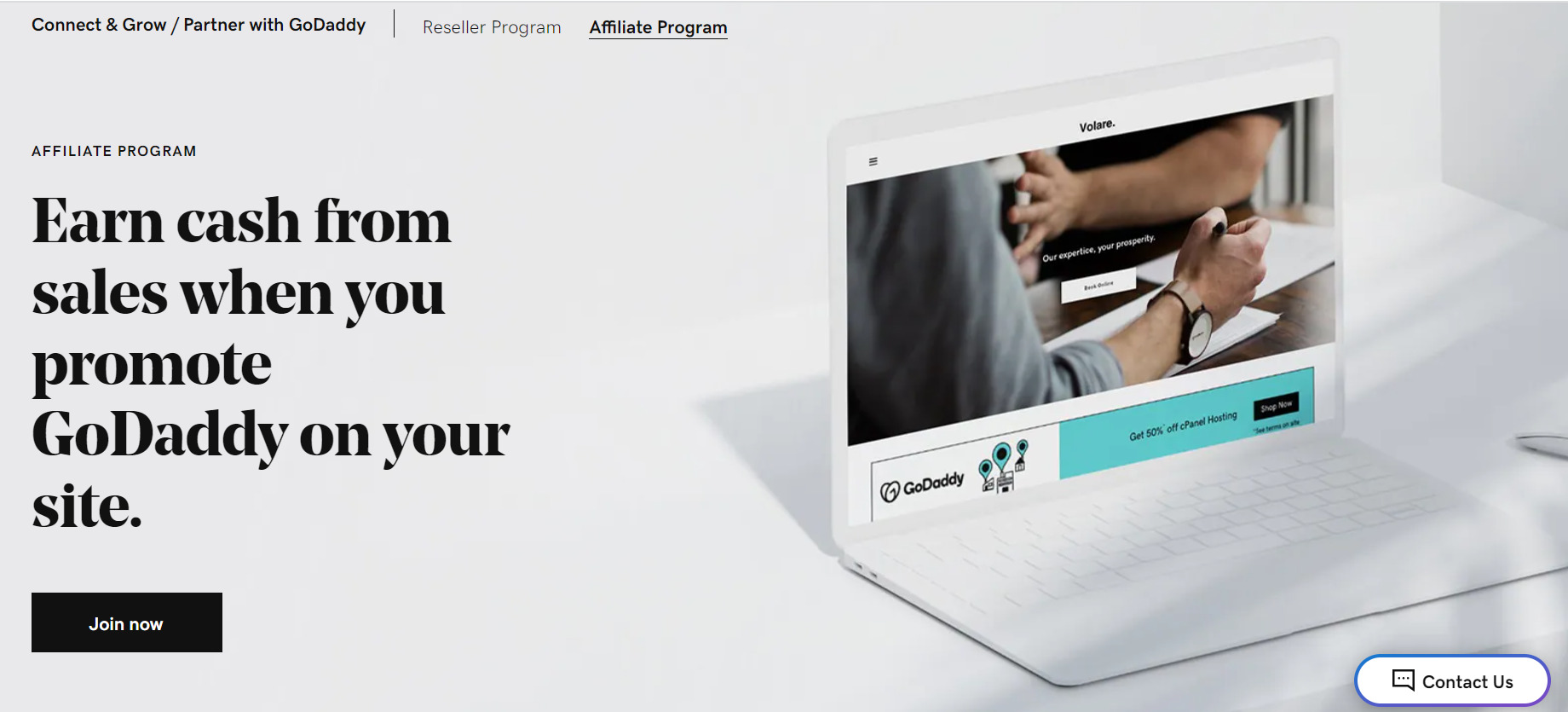
Earn cash from sales when you promote GoDaddy on your site with the GoDaddy Affiliate Marketing program.
4. Creating & selling knowledge and information products
Selling information products is one of the most profitable ways to monetize a blog. These products can include:
- eBooks: Easy to create and distribute, covering topics your readers are passionate about.
- Online Courses: Interactive learning experiences that provide step-by-step guidance on a subject.
- Workbooks/Planners: Printable resources to help readers organize or plan.
- Membership Sites: Platforms where subscribers pay monthly or yearly fees for exclusive content.
For example, a fitness blogger could sell an eBook on “30-Day Home Workout Plans,” or a personal finance blogger could create a course on budgeting. These products allow you to leverage your expertise while earning passive income.
Creating info products requires an upfront investment of time and effort. Research is crucial—surveys, polls, or reader feedback can help you understand what your audience wants. Once the product is ready, platforms like Teachable, Podia, or even your blog can help you market and sell it effectively.
The best part? You keep 100% of the profits and build a long-term asset for your blog.
5. Selling services online
If your blog showcases your expertise in a specific area, you can monetize it by offering services. This approach is common in niches like coaching, consulting, writing, or graphic design.
For example:
- Travel Bloggers can offer personalized trip-planning services.
- Food Bloggers might provide meal-planning consultations.
- Marketing Bloggers could offer one-on-one strategy sessions.
Services often yield higher income per client compared to ads or affiliate marketing. However, they also require more direct involvement, so they’re less scalable.
To market your services, create a dedicated “Work With Me” page on your blog. Include testimonials, case studies, and clear pricing to attract potential clients. As your reputation grows, you can increase your rates and even expand into group services like webinars or workshops.





Leave a Reply